Drytech(Guangzhou)Technology Co., Ltd Since 2006
Drytech(Guangzhou)Technology Co., Ltd Since 2006
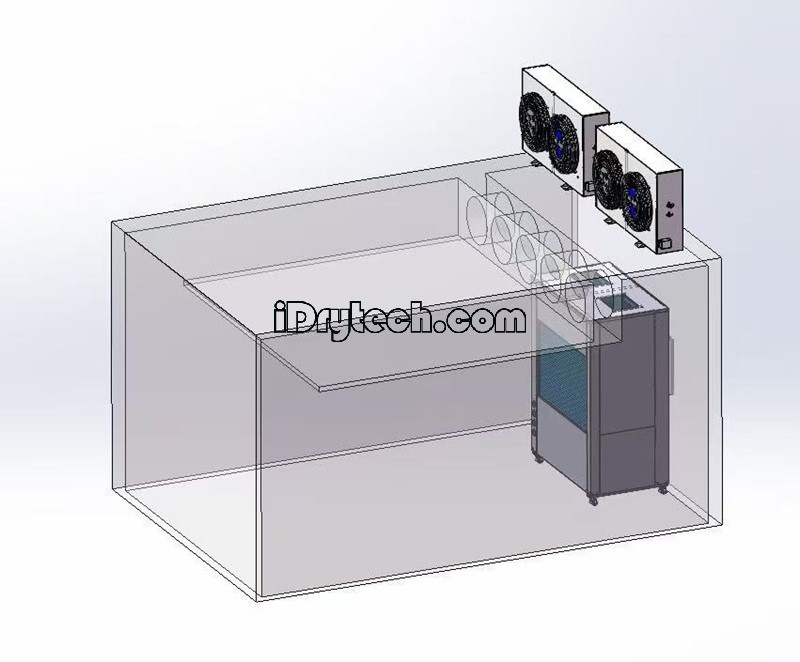
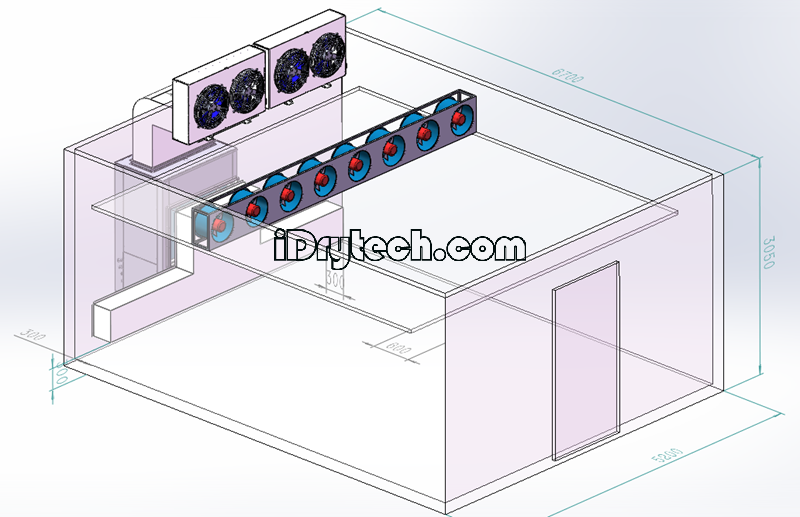
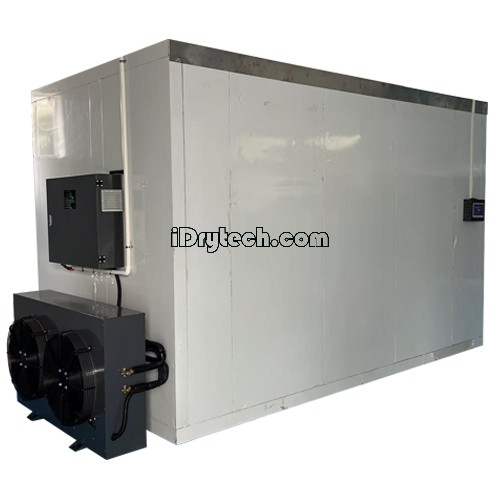
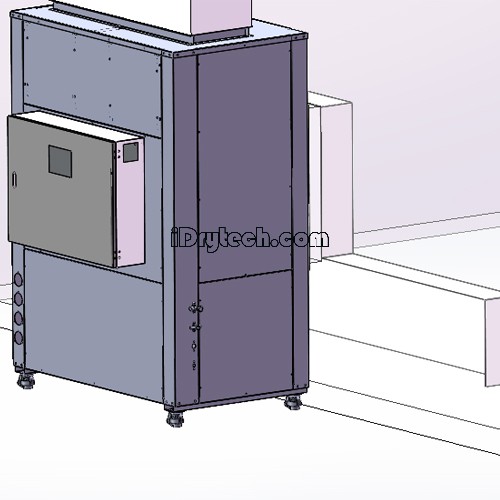
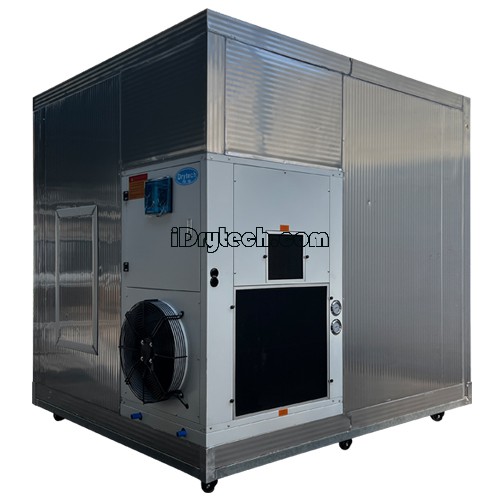
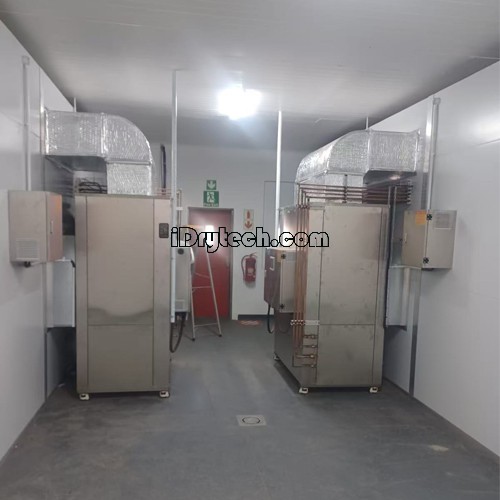
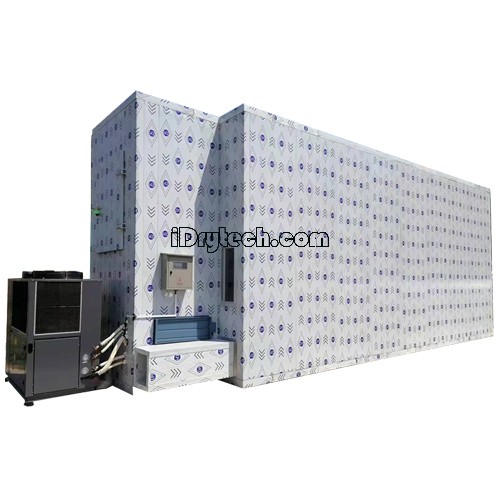
Low-Temperature Heat Pump Dryer for Drying Meat Strips and fish
Low-temperature heat pump dryers offer significant advantages in drying meat strips (such as making beef jerky, pork jerky, bakkwa, air-dried sausages, etc.). They efficiently, energy-savingly, and high-qualityly complete the drying process, making them highly suitable for the needs of the modern food processing industry. Below are the key points of application, advantages, and considerations:
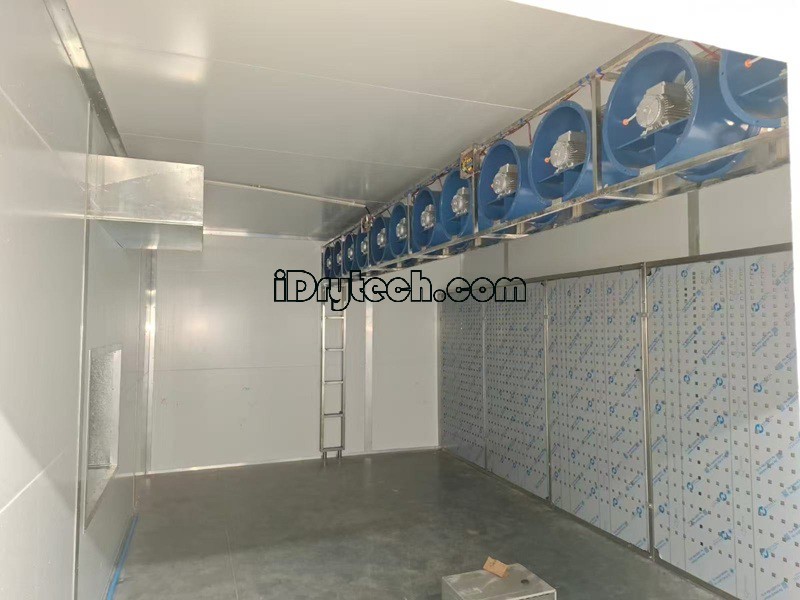
I. Application Advantages
1. Low-Temperature, Efficient Drying:
Core Principle: Heat pump technology absorbs low-grade heat energy from ambient air through a refrigeration cycle, upgrading it into high-grade heat energy usable for drying. The evaporator simultaneously acts as a powerful dehumidifier.
Temperature Range: The drying temperature can typically be precisely controlled between 21°C - 35°C (adjusted based on meat strip type, thickness, and process requirements). This is significantly lower than temperatures used in traditional electric heating or coal/gas drying (often exceeding 70-80°C).
Benefits:
Preserves Quality: Low temperatures avoid the destruction of proteins, fats, and flavor compounds caused by high heat (such as excessive protein denaturation, fat oxidation, and overdone Maillard reaction leading to charring and bitterness). The finished product has a natural color, tender and chewy texture instead of being dry and hard, and a purer, more intense flavor.
Prevents Surface Hardening: High temperatures can cause the meat strip surface to rapidly lose moisture and form a crust, hindering internal moisture migration outward (the "case-hardening effect"), prolonging drying time and causing uneven internal/external moisture. Low-temperature drying effectively avoids this issue, achieving uniform drying.
Reduces Fat Rendering: Low temperatures effectively suppress the melting and excessive exudation of intramuscular fat, preserving the moist, tender texture and appearance of the dried meat, while also reducing grease buildup inside the drying chamber.
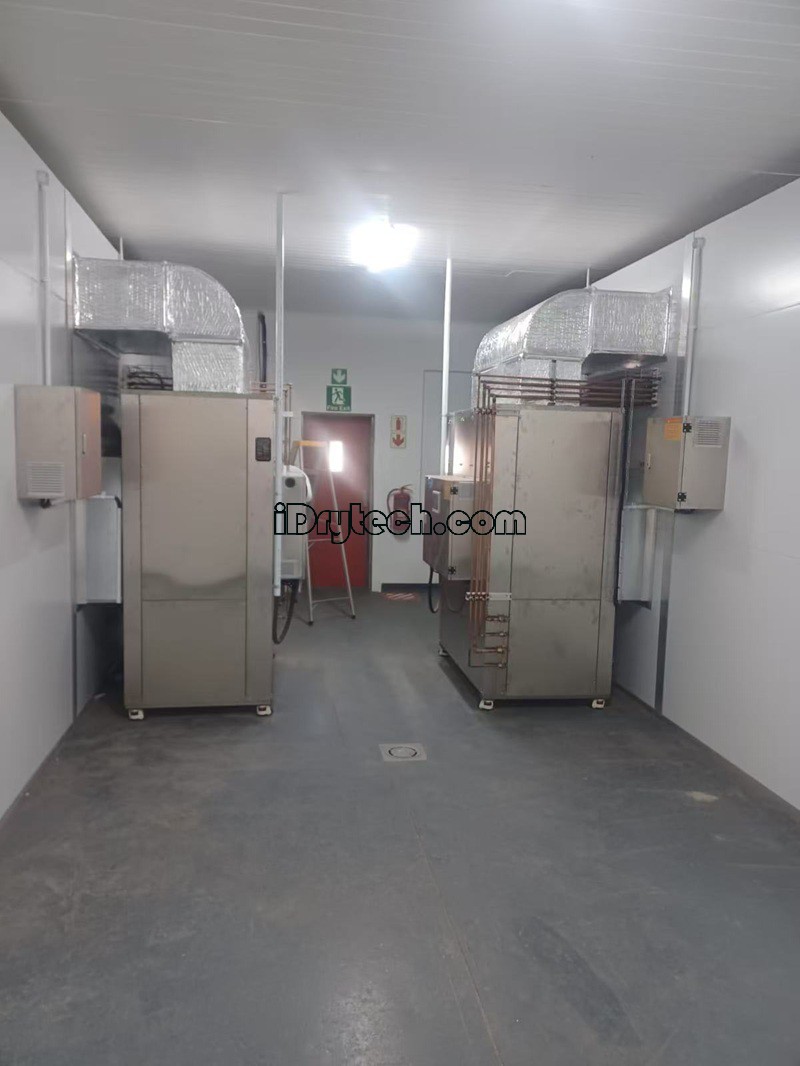
2. Precise Humidity Control:
The heat pump system can precisely control the humidity (Relative Humidity, RH) within the drying chamber by adjusting the operation of the evaporator (dehumidifier).
Benefits:
Prevents Condensation and Mold: During the initial drying stage, when the meat strip surface moisture is high and ambient humidity is high, precise dehumidification prevents water vapor from condensing on the meat strips or equipment surfaces, avoiding mold risk.
Optimizes Drying Curve: Humidity can be flexibly adjusted according to the needs of different drying stages (constant rate period, falling rate period), achieving the optimal drying rate and shortening the total duration.
Improves Uniformity: A stable humidity environment helps all materials dry uniformly.
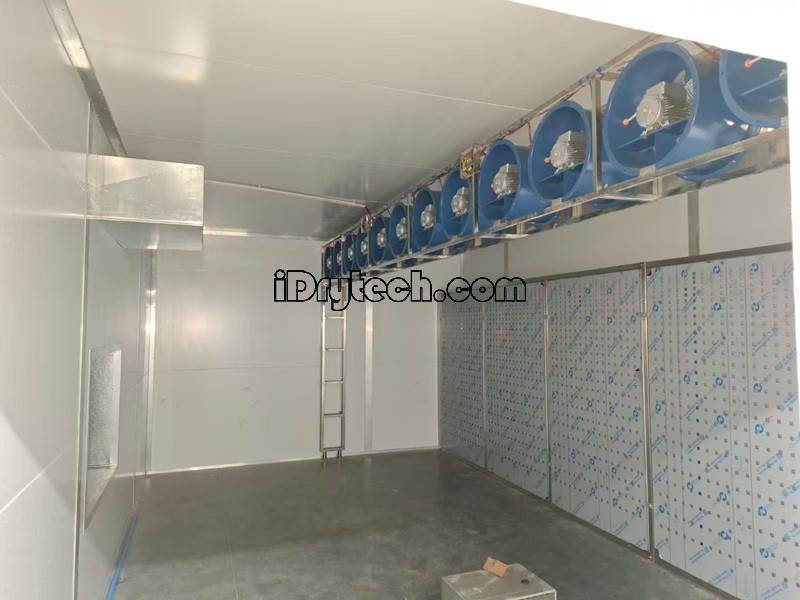
3. Exceptional Energy Efficiency:
The Coefficient of Performance (COP) of a heat pump typically reaches 3.0 - 5.0 or higher. This means that for every 1 unit of electrical energy consumed, 3-5 units of heat energy from the ambient air are transferred for drying, while efficiently dehumidifying. Compared to pure electric heating (COP ≈1) or gas heating (thermal efficiency usually 40-60%), energy consumption can be reduced by 40%-70% or more, significantly lowering operating costs.
4. Environmentally Friendly & Pollution-Free:
The operation produces no combustion exhaust emissions (unlike coal/gas), no open flames, ensuring safety and hygiene. Complies with clean production and environmental requirements.
5. High Level of Automation:
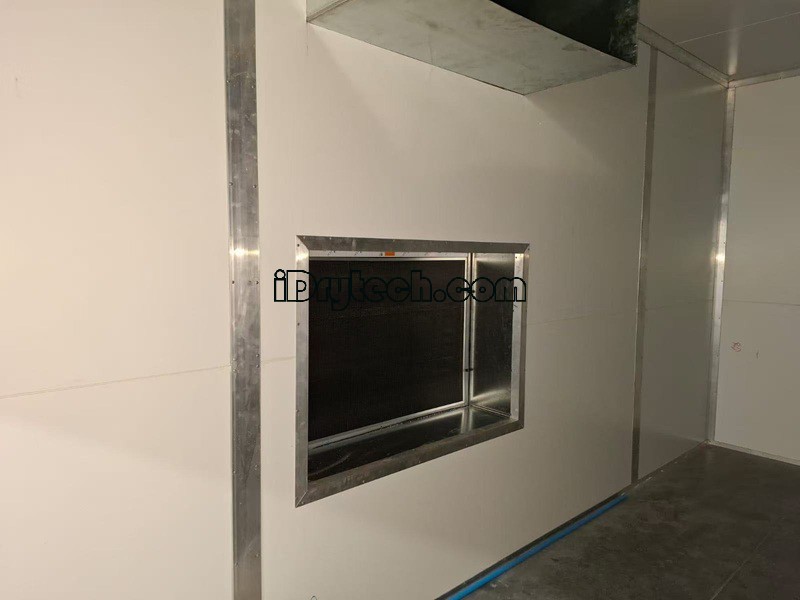
Modern heat pump dryers are usually equipped with PLC or microcomputer control systems. They can pre-set and store multiple drying process curves (temperature, humidity, time, air speed required for different meats and stages), enabling fully automatic operation, reducing manual intervention and operational errors.
6. Improved Working Environment:
The equipment operates with relatively low noise (especially high-quality brands), no high-temperature radiant heat, and no combustion exhaust fumes, creating a more comfortable and safer working environment.
II. Specific Application Process for Drying Meat Strips
1. Pre-Treatment:
Selection, washing, slicing/cutting into strips (uniform thickness and size are key).
Curing/Seasoning: Cure for flavor according to the product recipe. Curing time and conditions must be strictly controlled.
(Optional) Pre-cooking/Blanching: Some processes (e.g., for certain types of beef jerky) may involve pre-cooking.
2. Loading Trays/Racks:
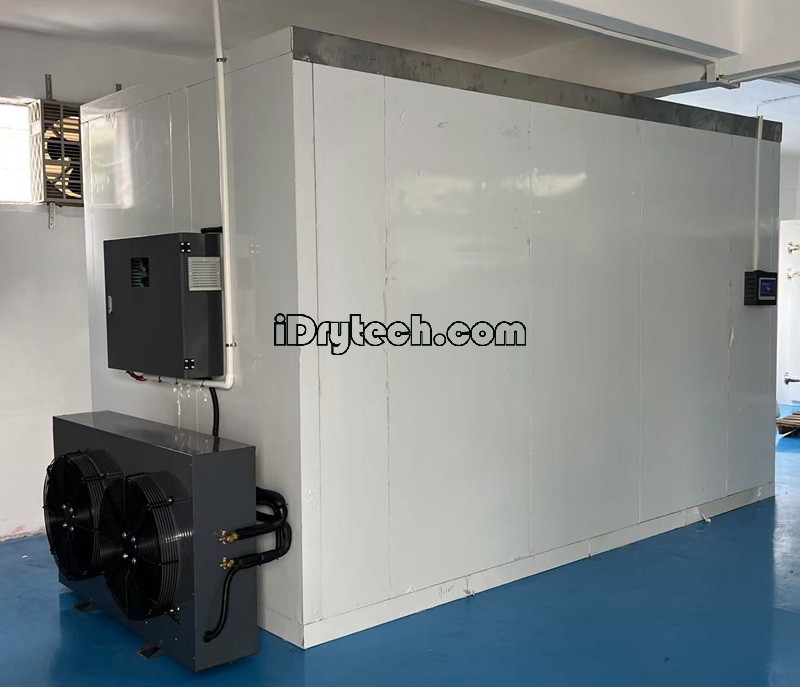
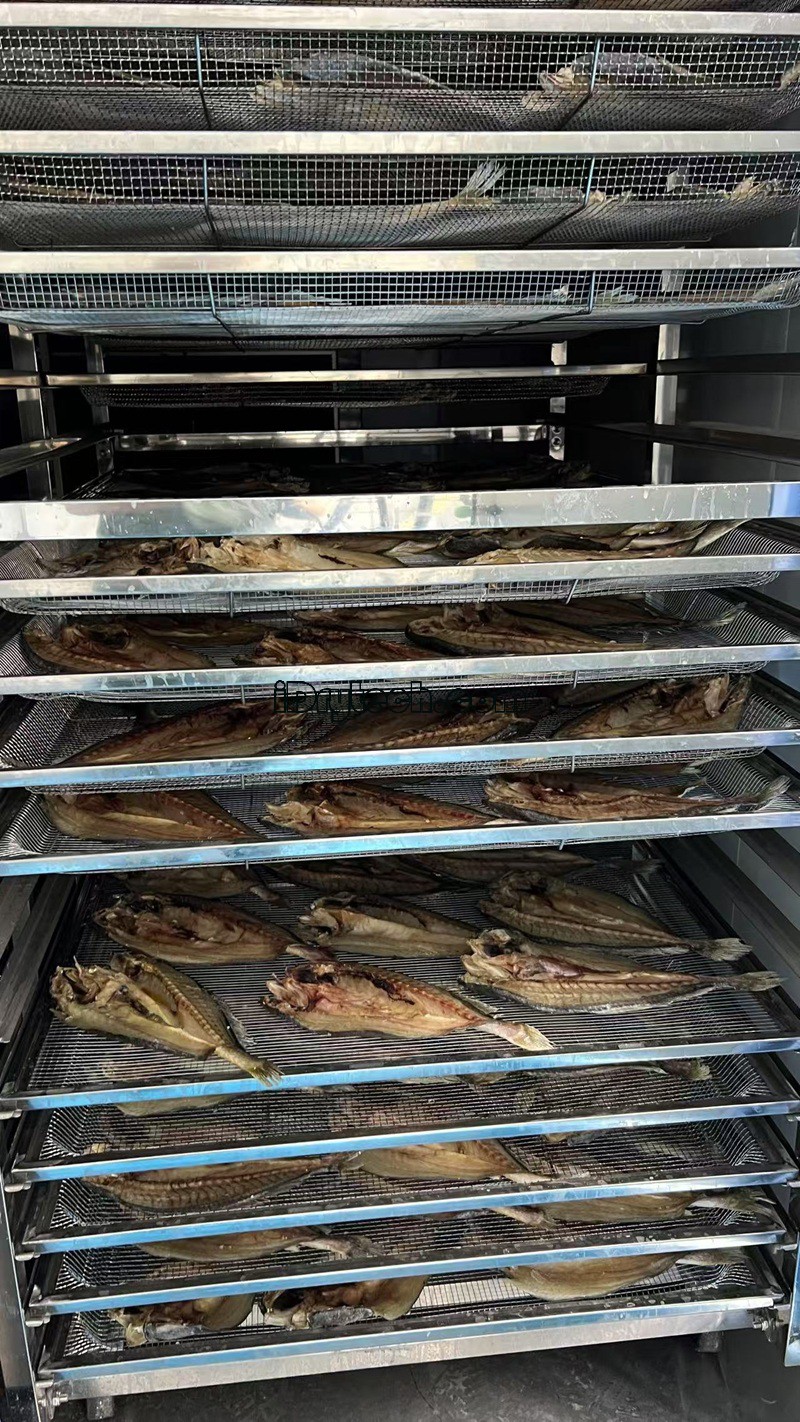
Spread the prepared meat strips evenly on drying trays/belts, ensuring adequate spacing for airflow.
3. Setting the Drying Program:
Select a suitable pre-set or custom drying process curve based on the meat type (beef, pork, poultry, etc.), thickness, initial moisture content, target moisture content, and product characteristic requirements (e.g., softness/hardness). A typical curve may include:
Preheating/Color Setting Stage (Short Duration): Slightly higher temperature (e.g., 30-35°C) for rapid heating, while maintaining higher humidity (e.g., 60-70% RH) to prevent surface moisture from evaporating too quickly and causing shrinkage that traps internal moisture. This stage may also promote color development (if curing color agents are used).
Constant Rate Drying Stage (Main Drying Period): Moderate temperature (e.g., 25-30°C), strong dehumidification (low RH, e.g., 30-40%). Surface free water evaporates rapidly during this primary dehydration phase.
Falling Rate Drying Stage: Temperature can be slightly reduced (e.g., 21-25°C), humidity may be slightly increased or kept stable. Moisture migration from the interior to the surface slows down; gentle drying is needed to prevent a dry exterior with a moist interior.
Moisture Equalization/Balancing Stage (Final Stage): Temperature further reduced (e.g., 21°C), dehumidification stopped or kept minimal. Allows moisture within the meat strips, between surface and interior, and between different positions, to slowly equalize, reaching the final target moisture content (typically 15%-25%, depending on the product), improving texture uniformity.
4. Running the Drying Process:
Close the dryer door and start the equipment. The equipment automatically controls temperature, humidity, fan speed (air speed is also crucial for uniform air distribution), and timed air direction reversal (if equipped) according to the set program.
During the process, the door can be briefly opened (if necessary) to inspect or turn the material (especially for thick strips or dense loading) to ensure uniform drying. Good modern equipment design minimizes this need.
5. Completion and Post-Treatment:
Stop the machine once the set time or target moisture content is reached (verified by spot checks with a rapid moisture analyzer).
Remove the meat strips and cool them to room temperature.
(Optional) Secondary Seasoning/Sterilization: After cooling, steps like oil spraying, mixing with seasonings, or pasteurization (low-temperature baking, microwave, etc.) may be performed.
Packaging: Vacuum or nitrogen-flushed packaging should be done promptly to prevent moisture reabsorption and oxidation.
III. Key Considerations
1. Uniformity:
Material Placement: Thickness, size, and loading density should be as uniform as possible, with sufficient air channels.
Airflow Design: The air duct design (horizontal/vertical air supply, baffles) and fan selection within the drying chamber must ensure hot air penetrates all material layers evenly, avoiding dead spots. Choose equipment with adequate air volume and pressure.
Turning/Re-positioning Trays: For thicker strips or large drying chambers, manually changing tray positions (top/bottom, inside/outside) or turning the strips mid-way through drying significantly improves uniformity. Some automated systems feature automatic tray rotation or reciprocating airflow.
2. Hygiene Control:
Equipment materials (e.g., chamber lining, trays) must be food-grade stainless steel (e.g., 304), easy to clean and sanitize.
Thoroughly clean the inside of the drying chamber, trays, condensate pans, etc., before and after each use to prevent residue buildup of grease and meat particles that can harbor bacteria and cause odors.
Perform regular deep cleaning and maintenance of the equipment.
3. Moisture Control and Safety:
Final moisture content is critical for product safety (inhibiting microbial growth) and texture. Reliable rapid moisture analyzers must be used for spot checks to ensure the target water activity (Aw) or moisture content specified by the process is achieved.
Follow HACCP principles, strictly controlling pre-treatment hygiene, curing conditions, drying speed (avoid lingering in the temperature danger zone), etc.
4. Process Optimization:
Different meats, formulations, and target products (softer/harder) require different drying curves. It's necessary to accumulate empirical data through trials to continuously optimize temperature, humidity, and time parameters.
Initial moisture content (draining level after curing) greatly impacts total drying time.
5. Equipment Selection:
Capacity Matching: Choose the drying chamber size and heat pump unit power according to production volume.
Temperature/Humidity Control Precision: Select equipment with high-precision temperature and humidity control.
Corrosion Resistance: The drying process produces vapor containing salt and grease. Components like evaporators and condensers need good corrosion protection (e.g., hydrophilic coated aluminum fins, stainless steel).
Brand and Service: Choose reputable brands with mature technology and reliable after-sales service.
IV. Summary
Low-temperature heat pump dryers are an ideal choice for drying meat strips (jerky, bakkwa, etc.). Through their core advantages of low temperature, precise humidity control, and high energy efficiency, they perfectly solve the problems often caused by traditional drying methods: quality deterioration (hardening, darkening, off-flavors, excessive fat rendering), high energy consumption, pollution, and difficult control. Applying this technology enables the production of high-quality dried meat products with natural color, tender and chewy texture, rich flavor, and guaranteed safety and hygiene, while significantly reducing production costs and enhancing market competitiveness. The keys to successful application lie in selecting suitable equipment, optimizing the drying process, strictly controlling hygiene and moisture, and ensuring drying uniformity.
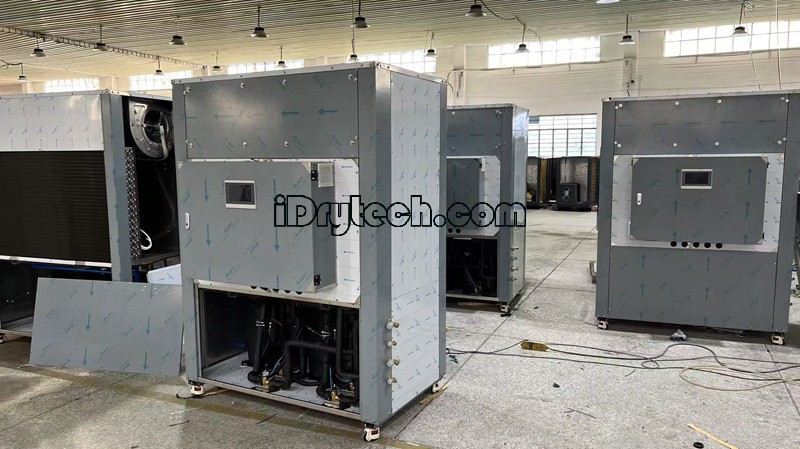
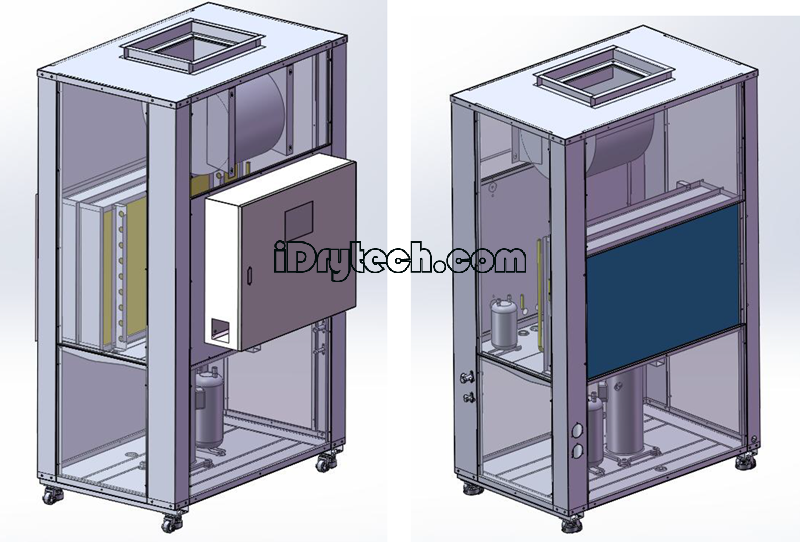
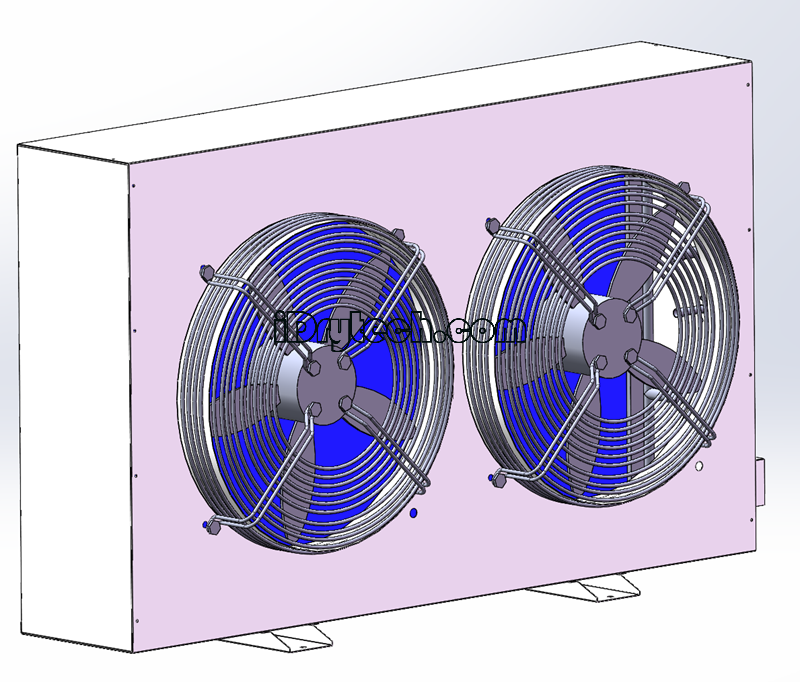
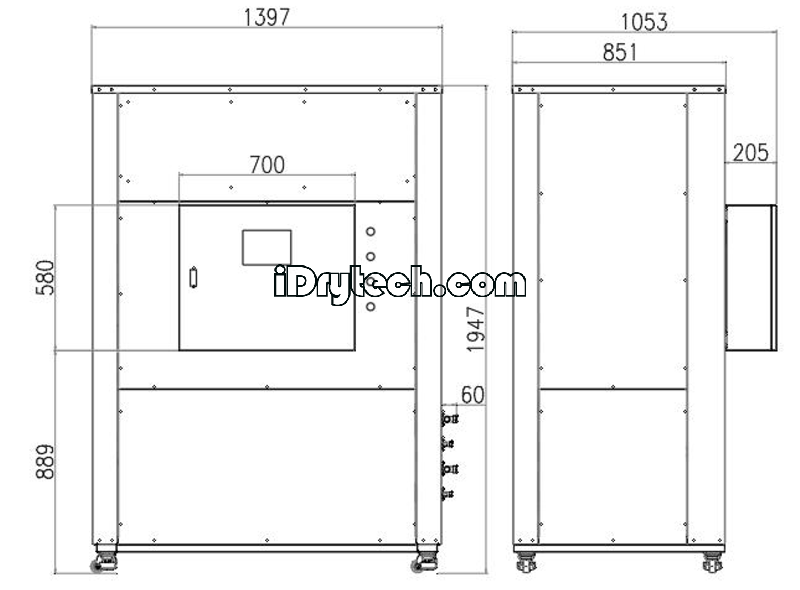
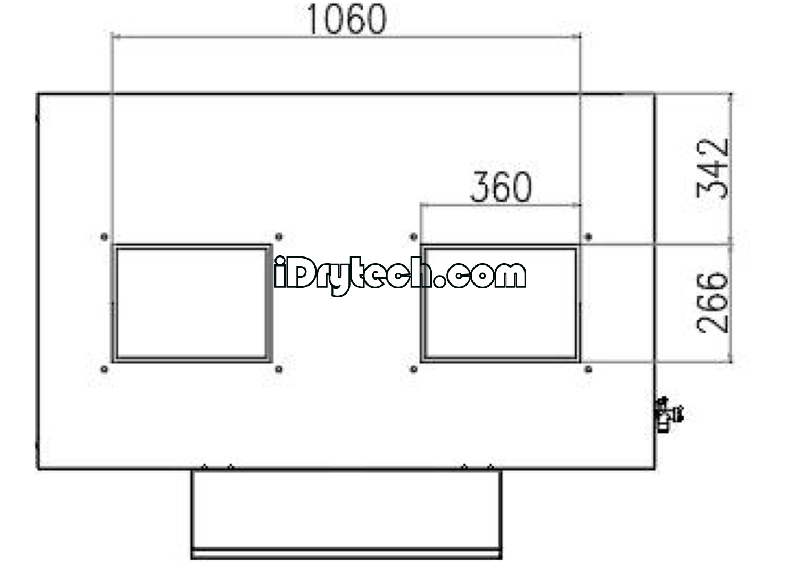
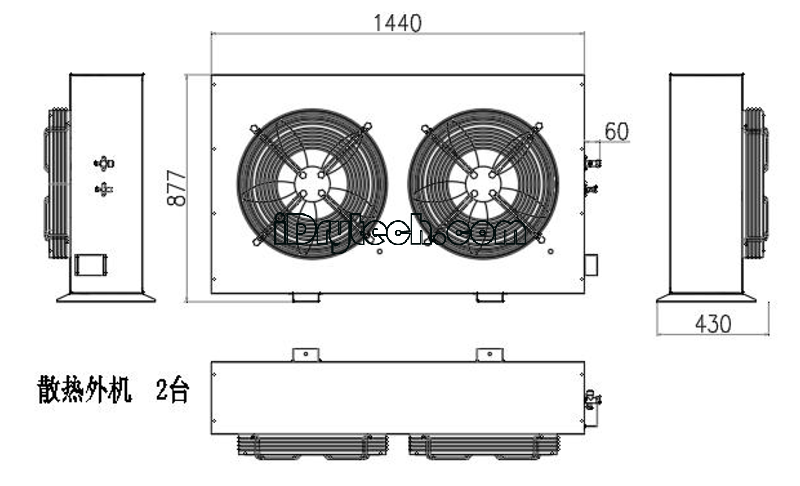
DT1500SC | |
Power supply/ | 380-415V/3PH/50HZ |
Heat pump power input | 14.7KW |
24pcs hot air fan(550W/pc) | 13.2KW |
Electric heater | 9.0KW |
Rated amp | 74.0A |
Max amp | 89.0A |
Heating capacity | 42.0KW |
Cooling capacity | 32.0KW |
Dehumidify capacity | 20L/H(35℃, RH80%) |
Drying room temperature | 21-35℃ |
Working condition | <45℃ |
Max exhaust pressure | 3.0Mpa |
Noise | ≤75dB(A) |
Controller | Drytech brand |
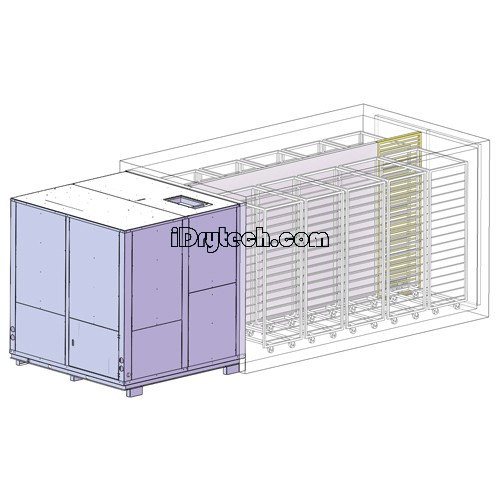
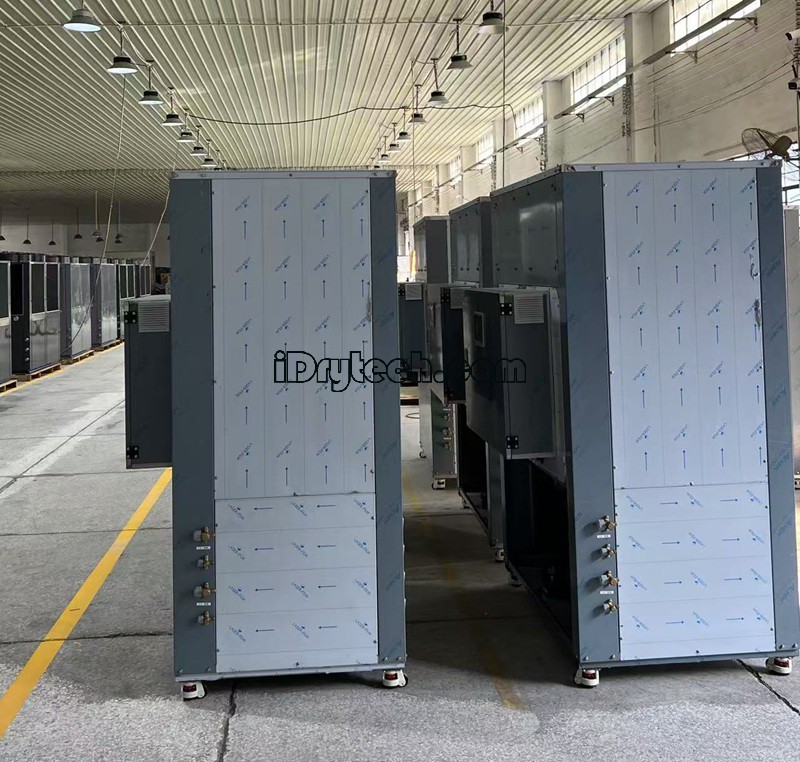
Heat pump indoor unit size | 1397*1053*1947mm |
Heat pump outdoor unit size | 1440*430*877mm(2units) |
R404A(KG) | 7KG*2pcs compressors |
Drying room size | 6000*3000*2700mm |
Trolley size(20pcs) | 870*610*1750mm |
Tray size(400pcs) | 800*600*15mm(flat tray) |
Since 2006
Drytech(Guangzhou)Technology Co., Ltd
Save more energy for a Greener Future
Copyright © 2024 Drytech All rights reserved. Sitemap Links: Drytech.com.cn Heat-Pump-Dryer.com Dryingmachine.net